A trillion dollars’ worth of legacy collections is about to flood the market. If you’re just starting out, don’t fall for it. Buy into the living ecosystem.
Over a drink with a friend last week, the more pretentious of us casually dropped “the Great Wealth Transfer” into the conversation (I’ll let you guess who). That’s the trillions about to pass from baby boomers to their kids, and it reminded me of a piece Bloomberg ran in July. It was about that generation’s prized art collections, and how nobody wants to deal with them now that the handover is near.
Its author married into the family of David A. Vaughan, an American painter who worked in the south of France near his hero, Matisse, then once back in California had solo shows in proper museums. The family now has 90 of his paintings, a lot of drawings, and a real headache over what to do with them.
They tried museums. The Los Angeles County Museum of Art took one painting in 2011, has never hung it, and has politely made clear it won’t take a second. The Bloomberg piece ends with the author saying he wouldn’t blame his own heirs for driving whatever’s left to a charity shop.
The great boomer art flood
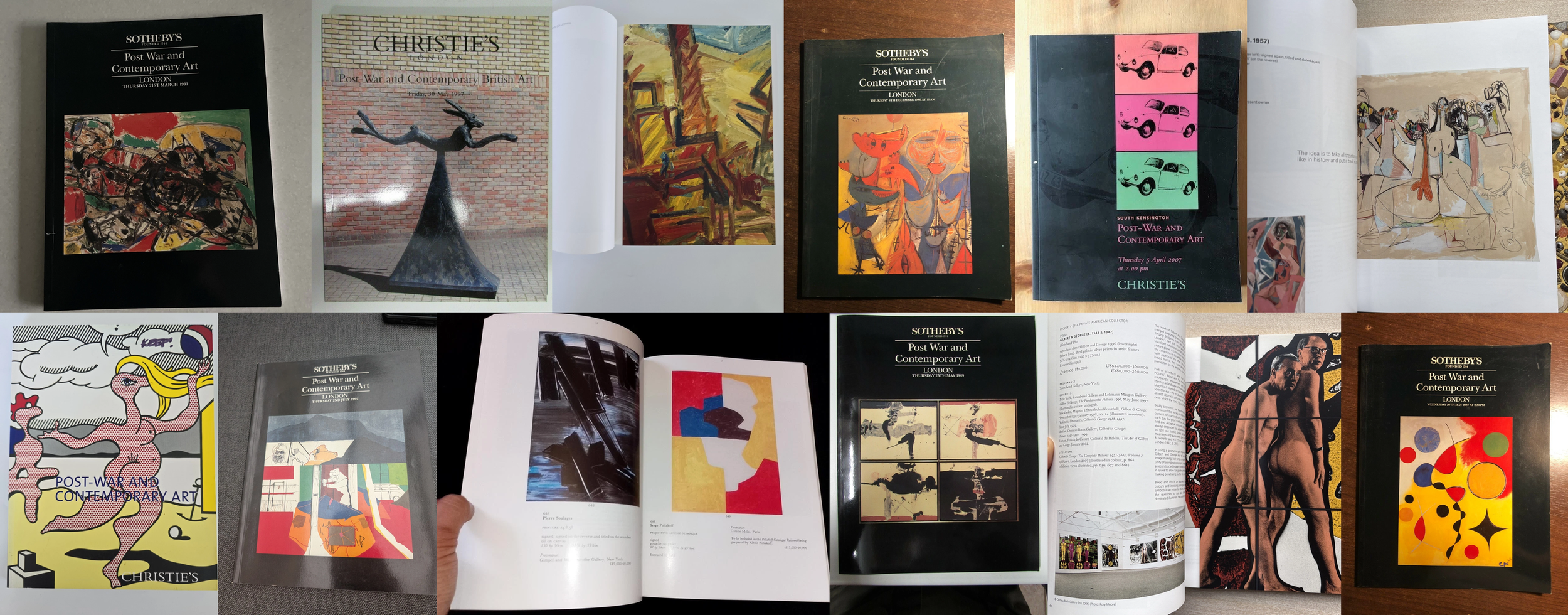
That generation didn’t just buy art. It created an entire industry. New York had about 150 galleries in 1946; by the early 2000s, that number had roughly quadrupled. Artnet’s auction database tracked 8,300 artists in 1988 and over 90,000 by 2012. (Thank you, Bloomberg, for rounding up the numbers for me.) That’s an awful lot of “important” artists in a business built on scarcity.
Deloitte reckons around $1 trillion of art will change hands in the next ten years, but many heirs don’t want to know a thing about it; an adviser who looks after 350 family collections didn’t dance around it too much: “The next gen don’t want it.”
The usual escape routes are blocked. Museums already have far more than they can show. Offer one a painting today, and you may very well be asked to send money with it, because storing and insuring art ain’t cheap.
Then there’s the small matter of taste. According to Oleg Sobchuk, a researcher at the Max Planck Institute for Evolutionary Anthropology, art fades from collective memory in two stages: a sharp drop soon after it’s made, then a long, slow decline until it’s mostly forgotten. Which, now that I think about it, sounds a lot like every summer banger. Most art, it turns out, is about its moment (ever heard of the zeitgeist?). When the moment passes, so does the attention, and so does the price, mostly.
So is blue-chip dead? (No. Keep reading anyway)
It would be tempting to claim the whole old-art market is about to crash. It isn’t. “Blue-chip”, stock-market slang for the big, famous names that supposedly only go up, is doing fine. The 2026 Art Basel and UBS report found US auction sales of works over $10 million rose by nearly 40% last year. Relax, everyone, nobody is driving a Picasso to the charity shop.
The trouble is in the middle. Think solid, established names that cost real money once: the painter who was a big deal in one city, the abstract artist who became a standard upper-middle-class status buy in the 1960s and 70s, the artist with a few museum shows and a respectable price history. The big auction houses won’t lose sleep over these, and that’s exactly the part of the market legacy collections will swamp.
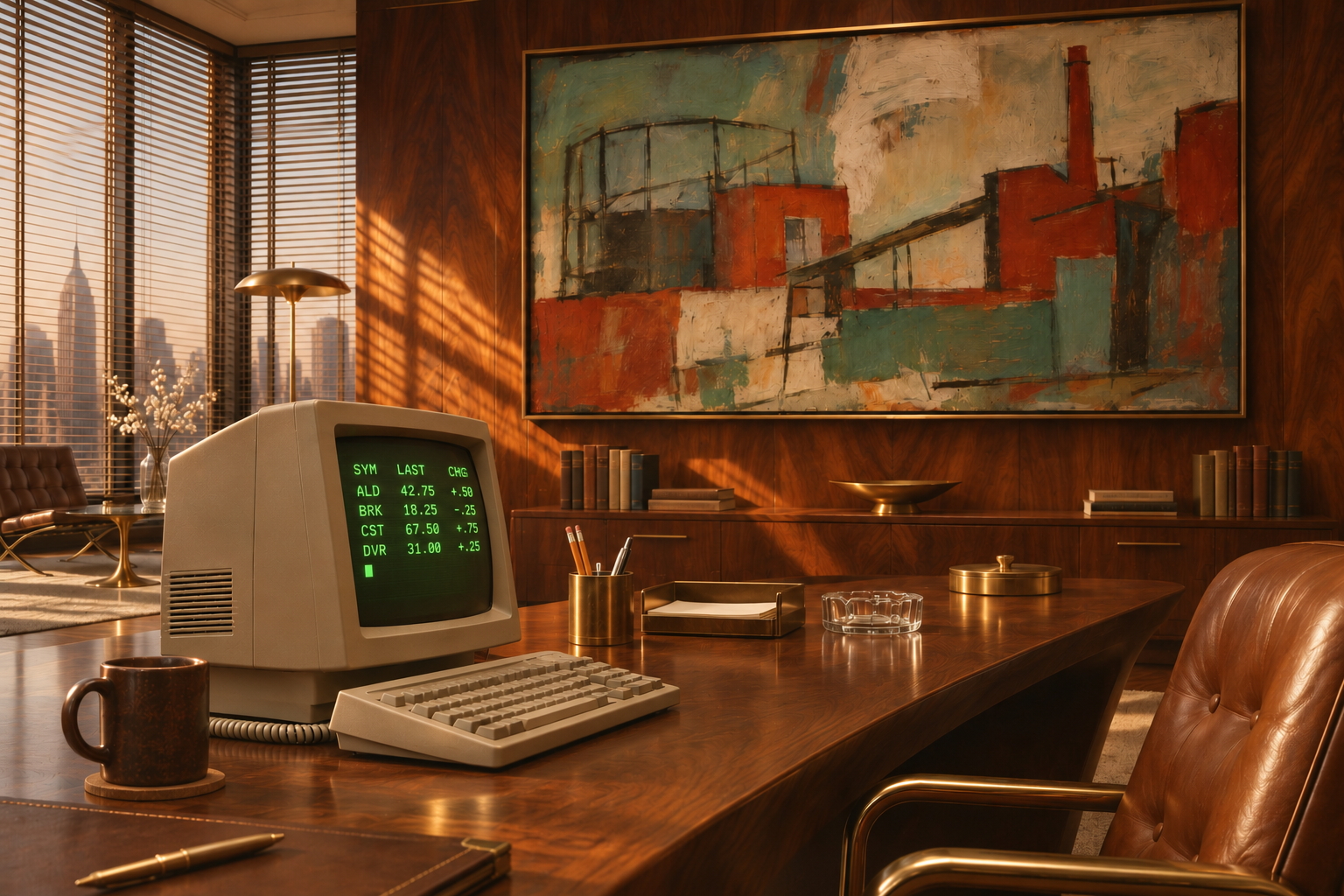
I remember the walls of my dad’s office in Milan in the late ’90s: the usual post-war contemporary suspects, the type every professional of a certain age with a wood-panelled office and a green-screen trading terminal would own. A handful of those artists’ early works still fetch decent auction prices. The rest, the later output, the prints and the paintings made to fill exactly that kind of wall (and boy, did that generation have walls to fill), go for a few thousand today, when and if anyone bids at all.
Here’s the irony. That middle is exactly what new collectors are often told is the “safe” option: a known name, a price history, a nice paper trail of previous owners. But “safe” here has an expiry date, and it ran out with the last generation.
More supply plus less demand equals lower prices (where’s my Nobel Prize in economics?!), and it gets worse: art is what people smarter than me call an “illiquid” asset. You can’t sell it at the click of a button, so when lots of owners head for the fire exit all at once, whoever needs the cash first takes whatever they’re offered, and drags everyone else’s price down with it.
Now, it is terribly tempting to give my already distressed post-partum brain cells a break and cut this short by saying “sell the dead, buy the living, get rich”, but guess what: emerging art is not a better investment. It’s just a better purchase.
So here’s the actual argument: you don’t have to invest in art. You can also just buy it, for God’s sake! The same forgetting curve applies to today’s emerging talent, so if almost nothing you can afford reliably holds its value, spare yourself the investment tale. It was always a little ego boost for sounding clever at dinner parties anyway (we’ve all been there). Instead, judge art by the returns that are real now: what your money does in this moment, who it reaches, and what you get to live with. On every one of those, living artists win.
Don’t invest. Just BUY.
“Investing in art” is a phrase stretched well beyond where it belongs. Somewhere along the way, buying a painting for above your sofa became “diversifying into alternative assets”. To be fair, some people really do invest in art: they hire people to do the research, buy with a strategy and hold for decades. Their paintings may sit in freeports (high-security, tax-free warehouses), get borrowed against and may as well be handed down with one eye on the dreaded brown envelopes (hello, His Majesty’s Revenue and Customs). By all means, call that an asset. For the rest of us, the investment angle usually arrives courtesy of a weekly email from an ex-insurance broker turned gallery salesperson, insisting you’ll 10x with an ugly Banksy print.
The alternative is refreshingly simple. You see it, it does something to you, you can afford it, you take it home.
You think you can’t afford art? Take what plenty of us happily spend on a new iPhone and/or a Dyson hair-thingy, and suppose you spent it in a living artist’s studio instead. That money starts working: it’s studio rent, canvases for the next series — maybe the series that gets them signed by a gallery. Money that reaches a working artist keeps the whole system alive.
And you get more back than a picture. You can build a relationship with the artist, because they’re alive. You can watch a career take off and know you were there early. You’ll probably end up on a lot of guest lists for openings too, and if you’re lucky, one day a museum might even ask to borrow your piece for a show (name a better flex!!). And if you ever do want to sell, even Bloomberg admits living artists are almost always easier to sell than dead ones: there’s someone around to push the work.
Then we’re back to the small matter of taste, again. Younger collectors are already buying more women artists and a far wider range of talent than their parents did. Buying your own generation’s art isn’t frivolous, it’s just having opinions.
There’s plenty of money floating around in fine art without much purpose. I’d rather point it where it’s needed and where it does something (I’d hate to use the word impact).
Buying like you mean it
Or, how not to end up as somebody’s Bloomberg feature in 2066:
Buy what you’d hang if it were worth zero. Statistically, it might be. If you still want to live with it, you’ve already won.
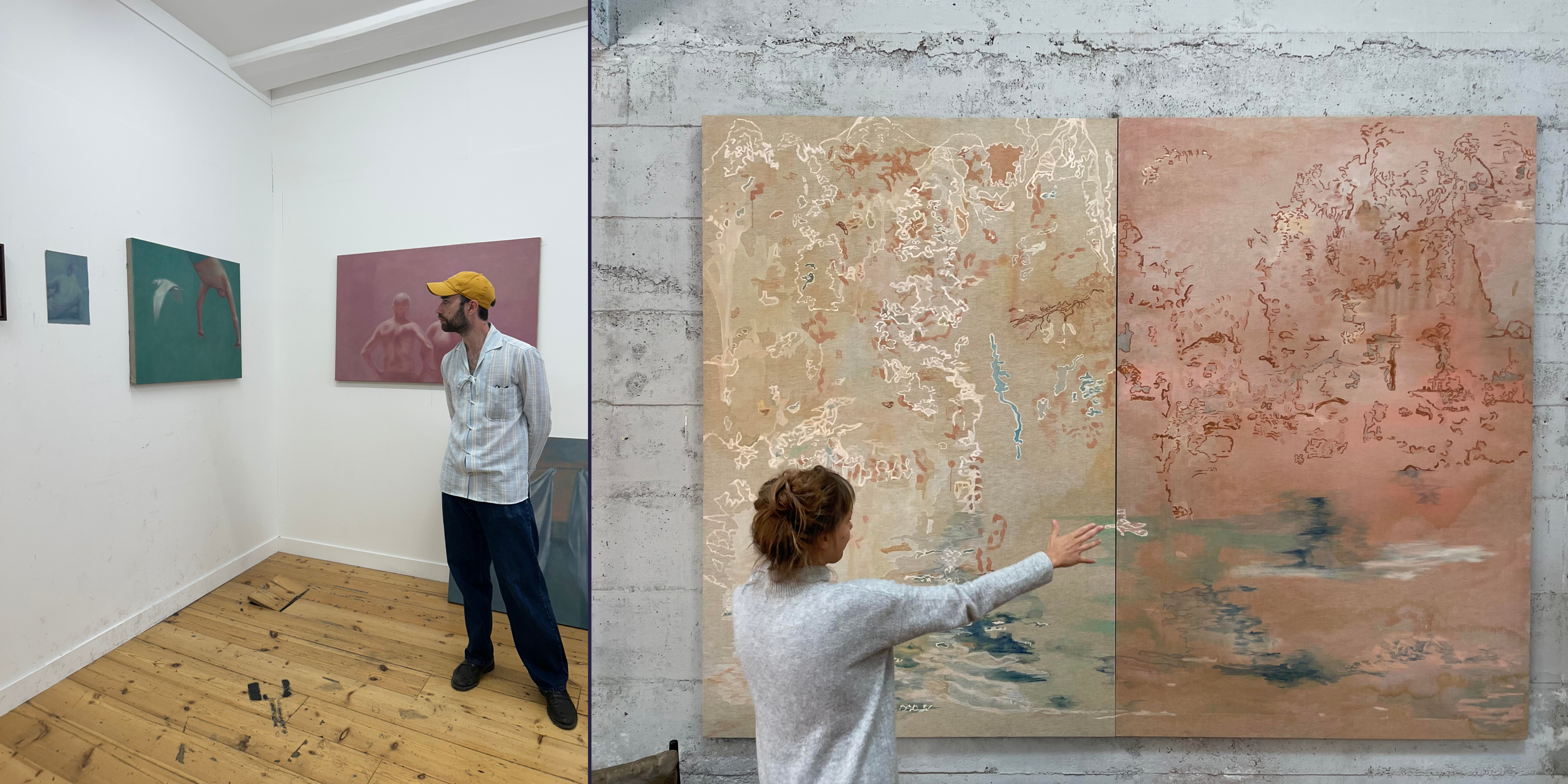
Get to know the artist before you buy.Visit the studio if that’s an option, look at what they made three years ago, ask what they’re working on next. If you’re curious where they’ll go from here, that’s a good sign.
Start in the studio, graduate to the gallery. Galleries are essential, both for an artist’s career and for buyers: they’re the best partners for more intentional collecting, and you should walk through that door when you’re ready. If you don’t feel ready for the whole gallery caboodle, though, don’t disqualify yourself altogether. Buy an original from an artist who isn’t represented by one yet. It beats a mass-produced poster EVERY. SINGLE. TIME.
Is the price fair? A five-minute check
Buying from a living artist isn’t charity. You’re paying for skilled work, and you’re allowed to check the price the way you’d check anything else.
Track record. Check their CV: an artist with a string of residencies and solo shows shouldn’t cost the same as someone who graduated last Tuesday.
Consistency. Similar works by the same artist (same size, same medium) should cost roughly the same. Many artists price by size, at a rate that grows as their career progresses, so asking how they price is perfectly normal.
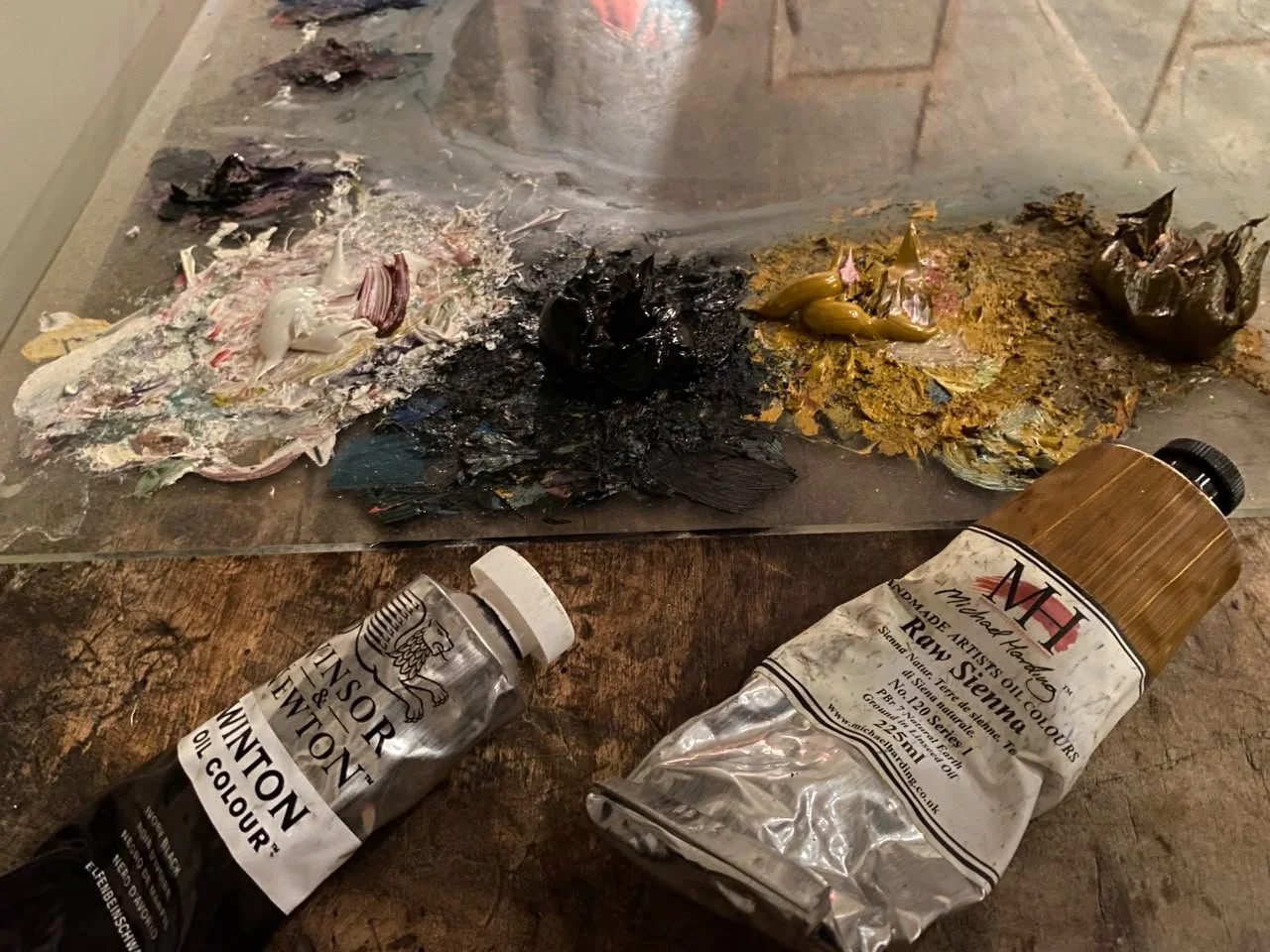
Materials, time and technique. An oil on linen that took two months isn’t an afternoon sketch on paper. Ask what it’s made of, how it was made and how long it took. An artist who can explain their price clearly is usually pricing thoughtfully.
The gallery test. Galleries typically take around half of every sale. A fair studio price sits in line with what the artist would ask through a gallery: not wildly above it, and not so far below that it causes them trouble once a gallery comes along. Remember, consistent pricing protects their career, and the value of what you’ve just bought! So don’t lowball them.
Peers. Degree shows, open studios and fairs for emerging artists are the quickest way to get a feel for the going rate.
Paperwork. Make sure it’s signed and dated, and get an invoice and a certificate of authenticity. It makes the work easier to insure, or to sell when your kids decide they don’t want it either.
If the answers add up, you’re not doing anyone a favour. You’re making a good buy.
Every artist is a dead artist, eventually
The Bloomberg piece ends on a shrug: most artists fade, and only a tiny few get the immortality thing. True. It applies to the painter you buy next month too.
You have to choose when your money meets an artist: while they’re alive and it can still buy paint, or long after, when it only covers a storage bill. Around a trillion dollars’ worth of art is about to change hands, and plenty of first-time buyers will be told that’s the sensible place to start. It isn’t. If you’re new to this, start with the living and emerging. There’s always time for the dead!
And if your beloved, ungrateful children turn out to have entirely different taste and sell the lot to fund a week at Burning Man, fine. You didn’t invest in it. You bought it, lived with it, met the person who made it and supported their career.
Why be an investor when you can be a patron?
Where to start
Full disclosure: the first one is yours truly.
Art Unpacked Studio Sales: IRL events and periodic newsletter drops of work by artists not yet represented or in between gallery engagements.
Carta Magna: beautiful works on paper from emerging and more established artists.
Filthy Fox Auction Club: a buzzy, playful, artist-run auction in London for emerging artists, held in the room and live on Instagram. The full hammer price goes to the artist.
The Salon: spend time with the work over a soirée in a private home before you’re given the chance to buy it.
Degree shows and open studios: free, and the best place to meet artists and learn where they’re at.
Sources that did the maths for me
Boomers Are Leaving Behind More Art Than Anyone Wants, Bloomberg, July 2026
The Art Basel and UBS Global Art Market Report 2026, Art Basel
Street Smarts on the 2026 Art Basel & UBS report, Cultured