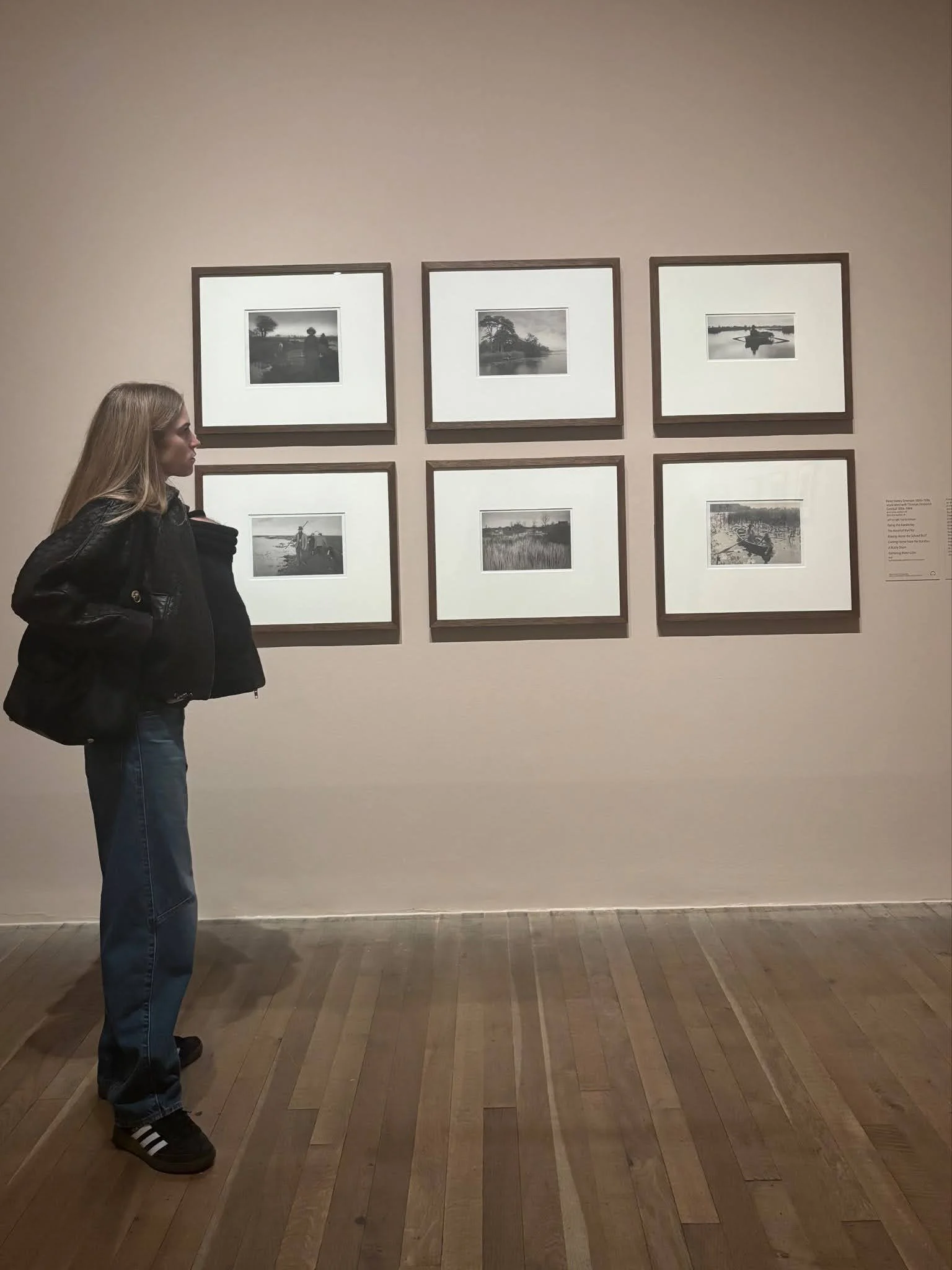
By Anna MarinTwo Tate exhibitions, The 90s: Art and Fashion at Tate Britain and Light and Magic at Tate Modern, and one question about photography and the rules we internalise.
I walked into Tate Britain’s The 90s: Art and Fashion with my three-month-old daughter in a sling, expecting nostalgia. Instead, I found myself wondering: am I really old enough for this to be in a museum? I was born in 1991, so I barely lived the decade. I grew up in its leftovers, yet there it was, on a wall with a label.
I stood in front of an image from Sophy Rickett’s Pissing Women series and stopped, wondering whether it belonged there. A young woman in a sharp business suit, hair neat, heels polished, stands in the City of London at night with her skirt lifted, doing something she is absolutely not supposed to do. She is slim, composed and beautiful, the picture of the professional woman, and she looks completely unbothered. The setting is a mess, and the act is a provocation, but she is not. It was messy in its subject and exact in its construction, and it was the 90s as I came to understand it: you could break every rule, as long as you still looked the part.
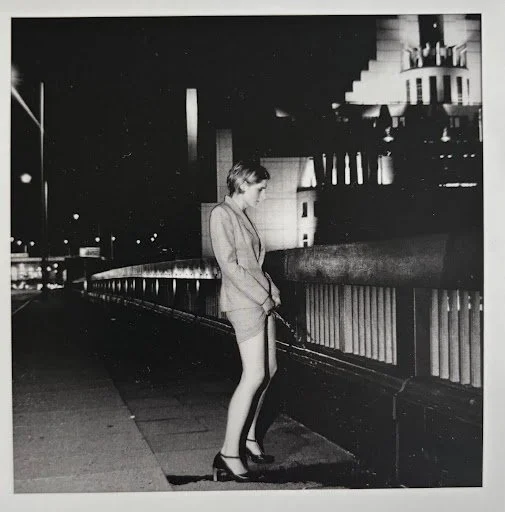
Sophy Rickett - Pissing Women
“You could break every rule, as long as you still looked the part.”
The show tells a story of a generation tearing down hierarchies and bringing art, fashion and photography into one force. I believe it, and in many ways I love it. But it wasn’t only that woman in the suit who stayed with me. It was almost every woman in the exhibition, including the iconic pictures of supermodels like Kate Moss and Naomi Campbell. Walking from one photograph to the next, I saw how alike the bodies were: slim, polished, styled to look unstyled.
The exhibition frames the decade as one of freedom and rebellion, and in many ways it was. But the same pictures that felt like freedom also taught a very narrow idea of what a body should be. The rebellion and the ideal shared the same frame. I looked for that second half of the story in the rooms, and I didn’t find it. It was the other 90s, the one that reached me in the 2000s, when I was old enough to take it in.
The other 90s
I grew up in the Swedish countryside with no money, and the world came to me through a screen and a letterbox. On America’s Next Top Model, girls were judged on their weight, and “fat” was delivered as a verdict, as if it meant ugly and wrong. Years later, Netflix revisited the show in a documentary, where its host acknowledged she had gone too far. At the time, nobody said that. We watched it as entertainment, and I learned what a body was worth.
Then there were the magazines. I got a subscription to a Swedish teen magazine as a gift, and I read headlines like “lose X kilos in X days” as if they were rules. I wanted to do everything right to fit in, and the pages told me exactly what right looked like. Looking back, I can’t believe the chokehold they had on a girl who just wanted to belong. Nobody called it a standard. It was just how a woman was supposed to look.
Maybe that is why this landed differently now. I spent my maternity leave walking through exhibitions with my daughter against my chest, and somewhere between rooms I started thinking about my own childhood, and hers. She has no rules yet. Nobody has told her what a body is worth or what right looks like. That won’t last. She’ll learn them soon enough, from screens, from other people, and probably from me too.
Light and Magic at Tate Modern
A few days later, my daughter and I went to Tate Modern for Light and Magic, which follows pictorialism around the world from the 1880s into the 1960s. Pictorialism was an international photography movement whose followers wanted photography to be seen as art, not just a way of recording what was in front of the camera. They wanted to paint with light. They used soft-focus lenses to blur detail and labour-intensive printing processes, sometimes adding brushwork or pigment by hand, and they favoured mood and atmosphere over strict factual accuracy. They also formed a community, with clubs, societies and salons, insisting together that their medium deserved to be taken seriously. That was a challenge to society’s idea of what photography was. It also meant meeting the standards of the people who decided what counted as art.
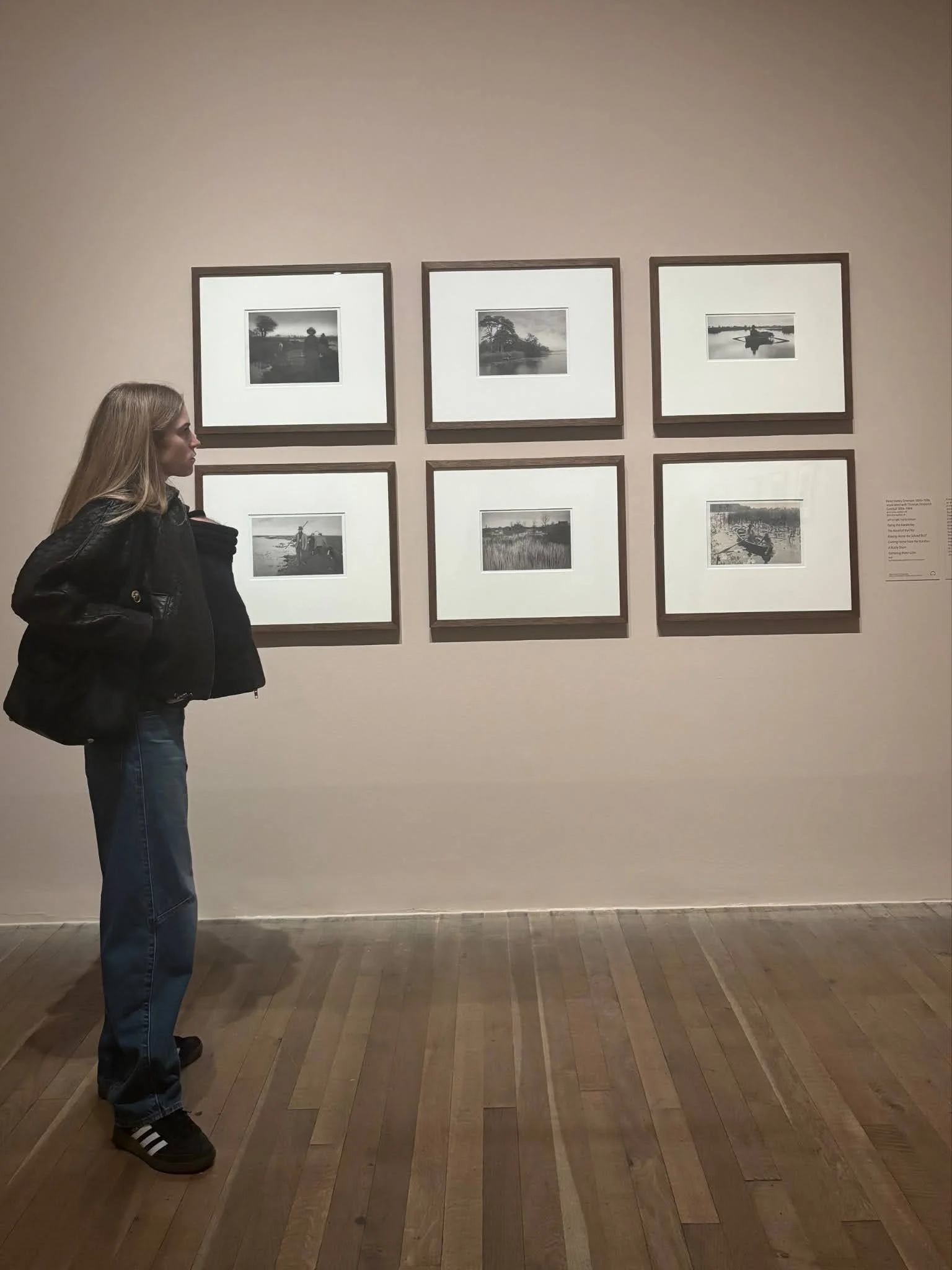
Anna and her three-month-old at Tate moderns Light and Magic: The birth of art photography
The pictorialists made no secret of the fact that their images were constructed. They didn’t hide their manipulation; it was part of their artistic claim. In the magazines I grew up with, the construction was harder to see. Images were retouched until they presented an artificial ideal as something natural and attainable. A cover was worked on until it looked like a record of a real woman, and the headline beside it treated that woman as something I could achieve. Soft focus had once been a declared choice. Now it was an unadmitted one.
The raw 90s look sat between the two, claiming to be the thing itself, with no styling and no staging. In fairness- it did show people and places that glossy 80s fashion left out. But someone chose the model, the room, and a light that looked like no light. Not trying is the hardest thing to perform.
Who gets to set the rules?
The question of who sets the rules doesn’t stop at the images themselves. It extends to who gets to decide which images matter, which acts of rebellion are remembered, and which stories make it onto museum walls.
The 90s is a McQueen-sponsored show, with Dazed as its media partner, curated through the lens of a fashion industry figure. There's an irony in seeing a decade defined by sticking it to the man presented by the man himself. I don’t mean this as an accusation. Museums need funding, and rebellion has rarely existed entirely outside the systems it challenges. But it does raise a nagging question: when a rebel needs the system's permission to be heard, is that rebellion, or just a better way of belonging? Maybe it’s both. Maybe every artist who has ever been heard worked inside someone’s rules. I’m tempted to say that’s fine. Then I think of the girl with the magazine subscription, reading the rules, and of the baby against my chest, who hasn’t learned any yet. One day she will probably walk into an exhibition about her own childhood. I wonder what will be on the wall, and what will be left out of the frame.
The 90s: Art and Fashion is at Tate Britain until 14 February 2027.
Light and Magic: The Birth of Art Photography is at Tate Modern until 21 February 2027.