Inside Harriet Gillett's London Studio: Painting Between Memory and Dream
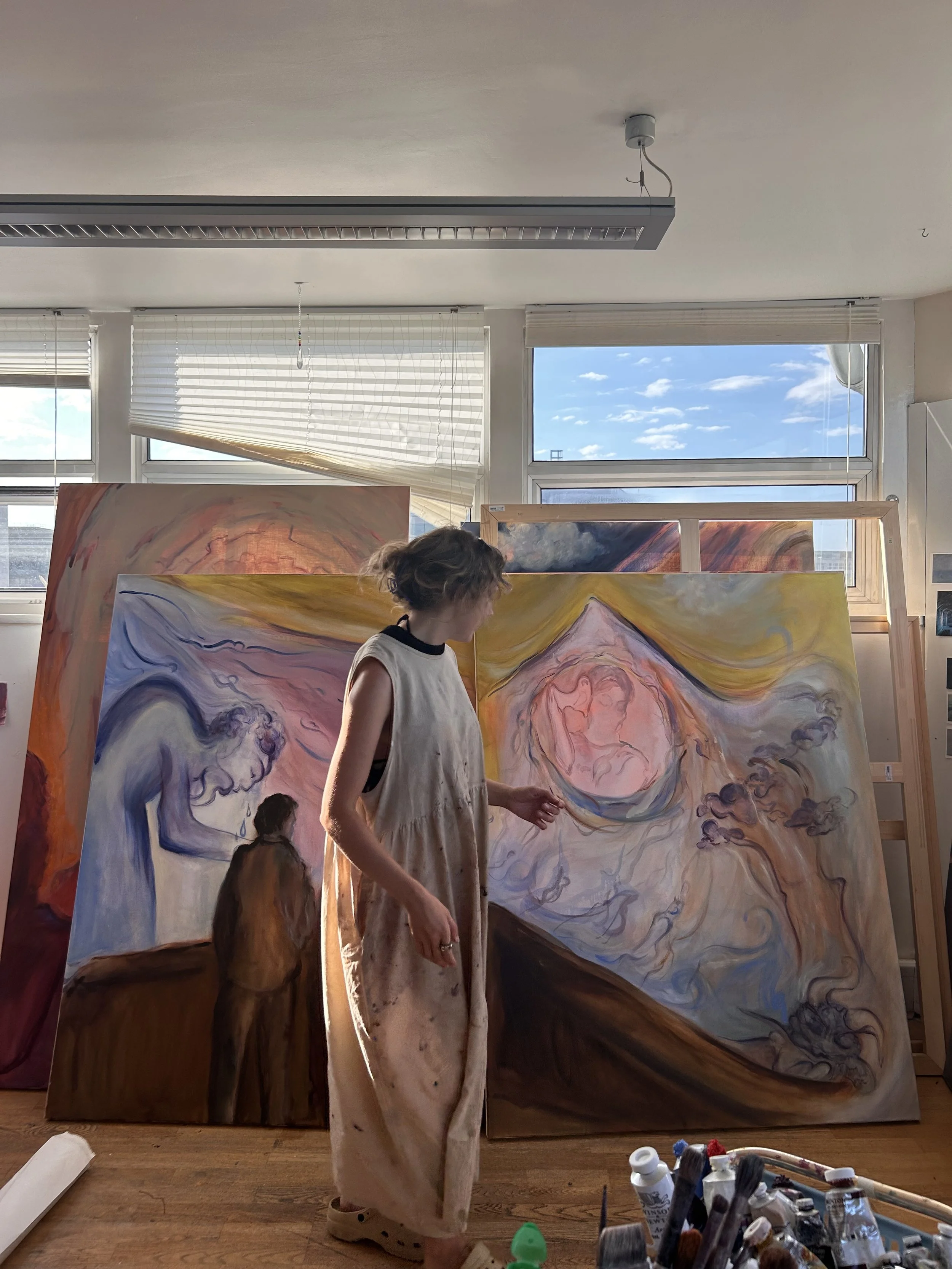
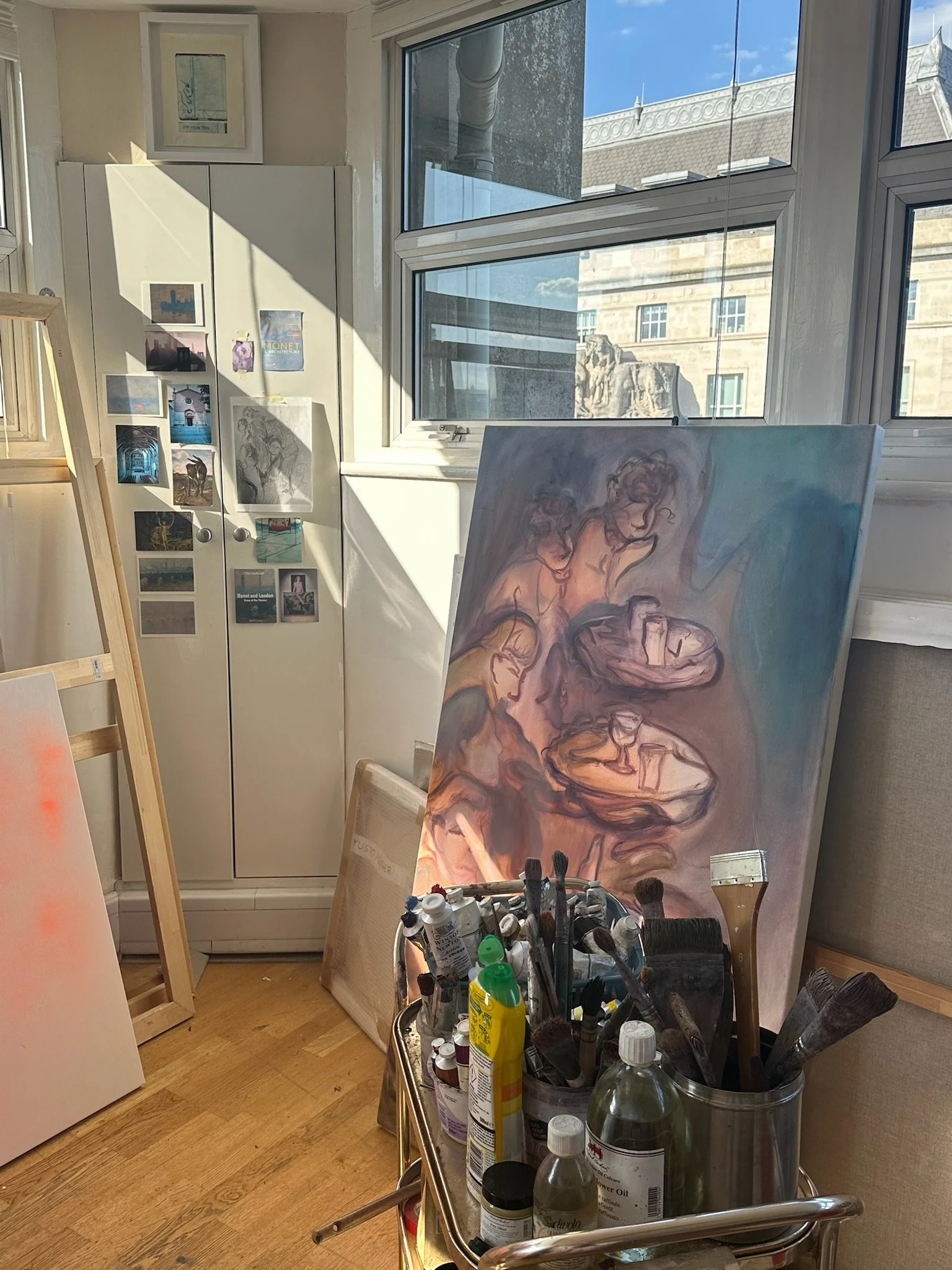
There are few places I find more compelling than an artist's studio. By now, that will hardly come as a surprise. There's something endlessly fascinating about looking behind the scenes: being surrounded by sketches, experiments, the odd memento collected over the years, and the beautiful chaos of making.
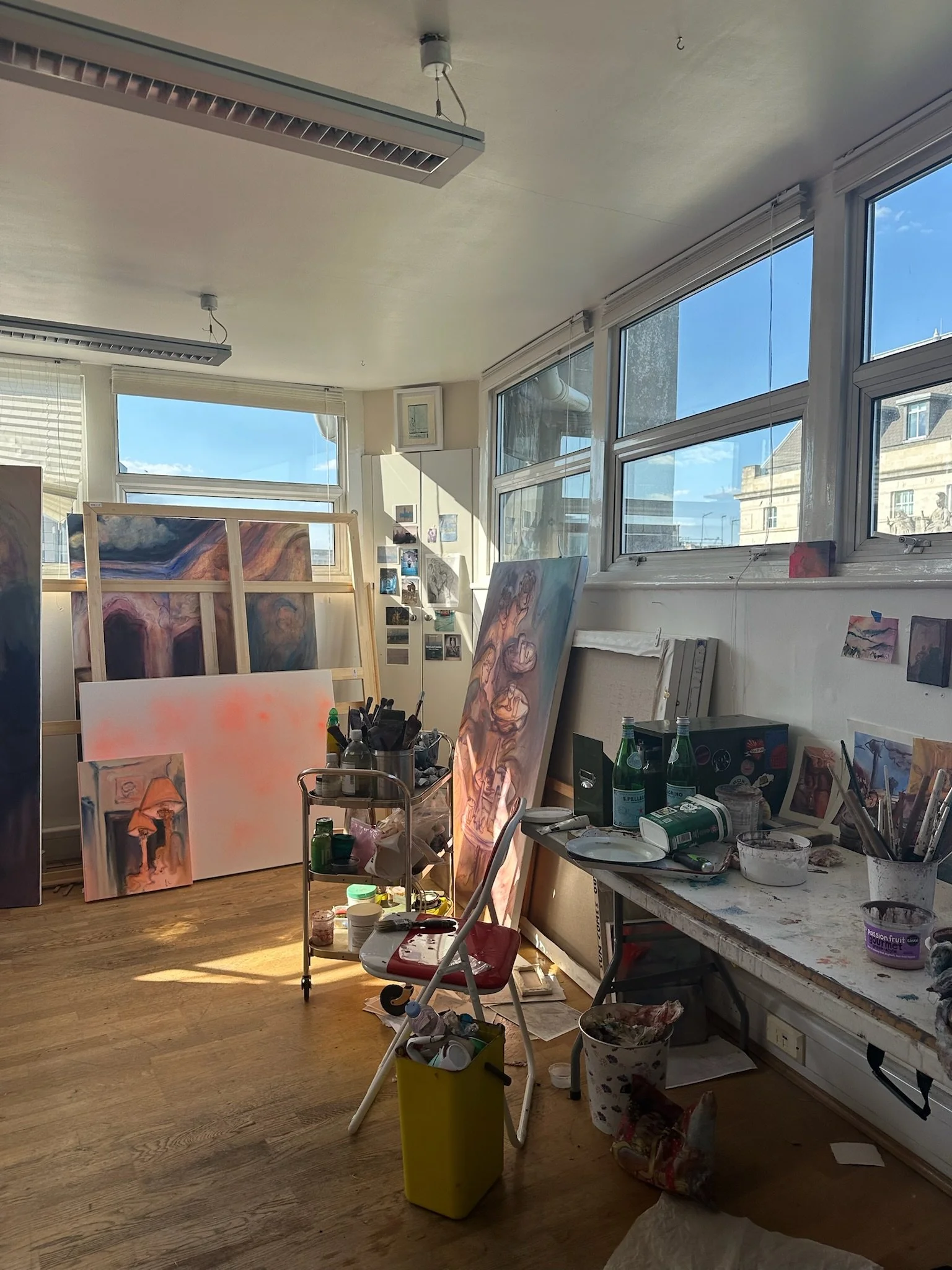
Last week, the Art Unpacked team had the pleasure of stepping inside the London studio of Harriet Gillett, whose intimate, suspended paintings explore the ways we experience place, memory, and community.
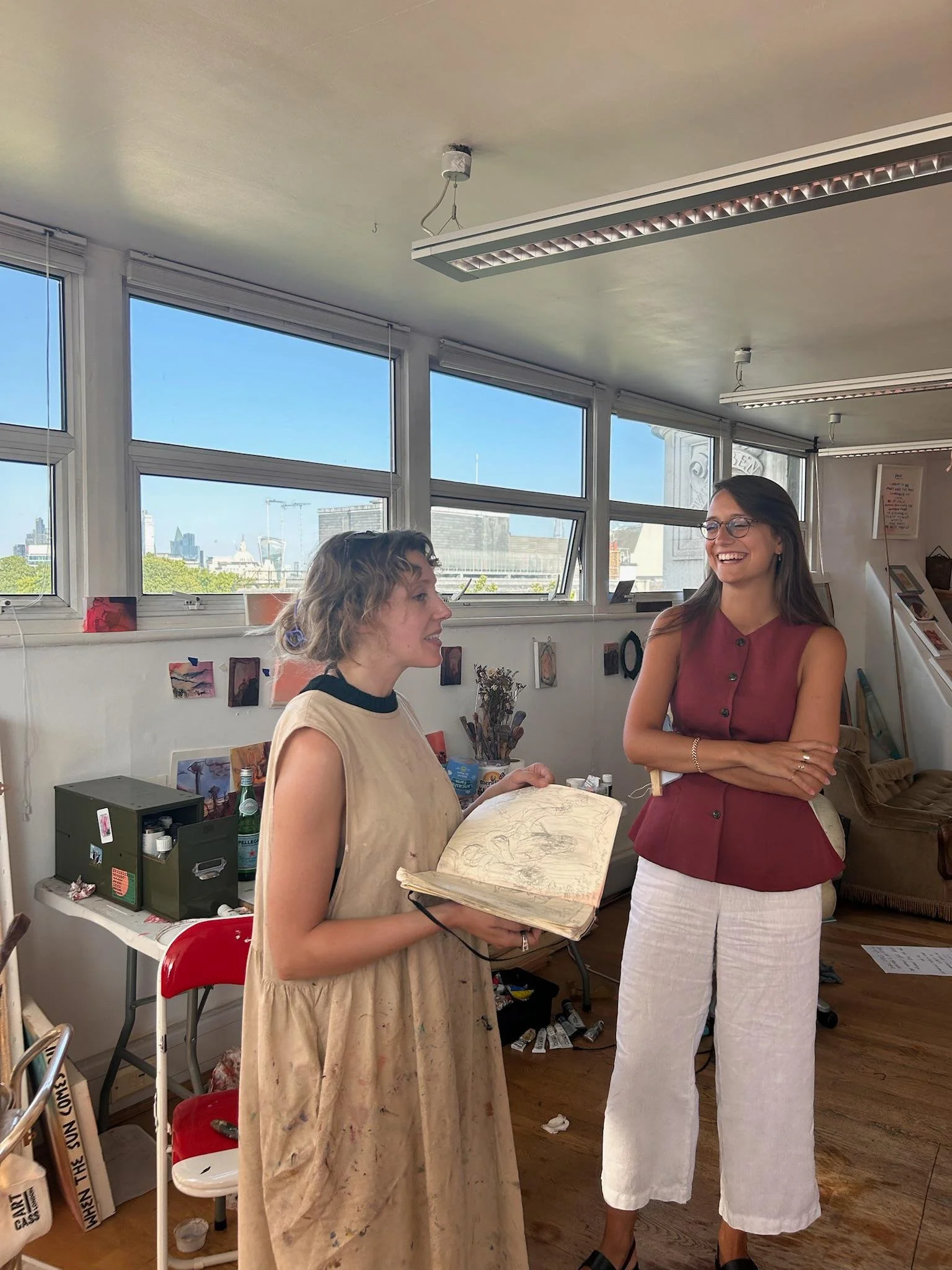
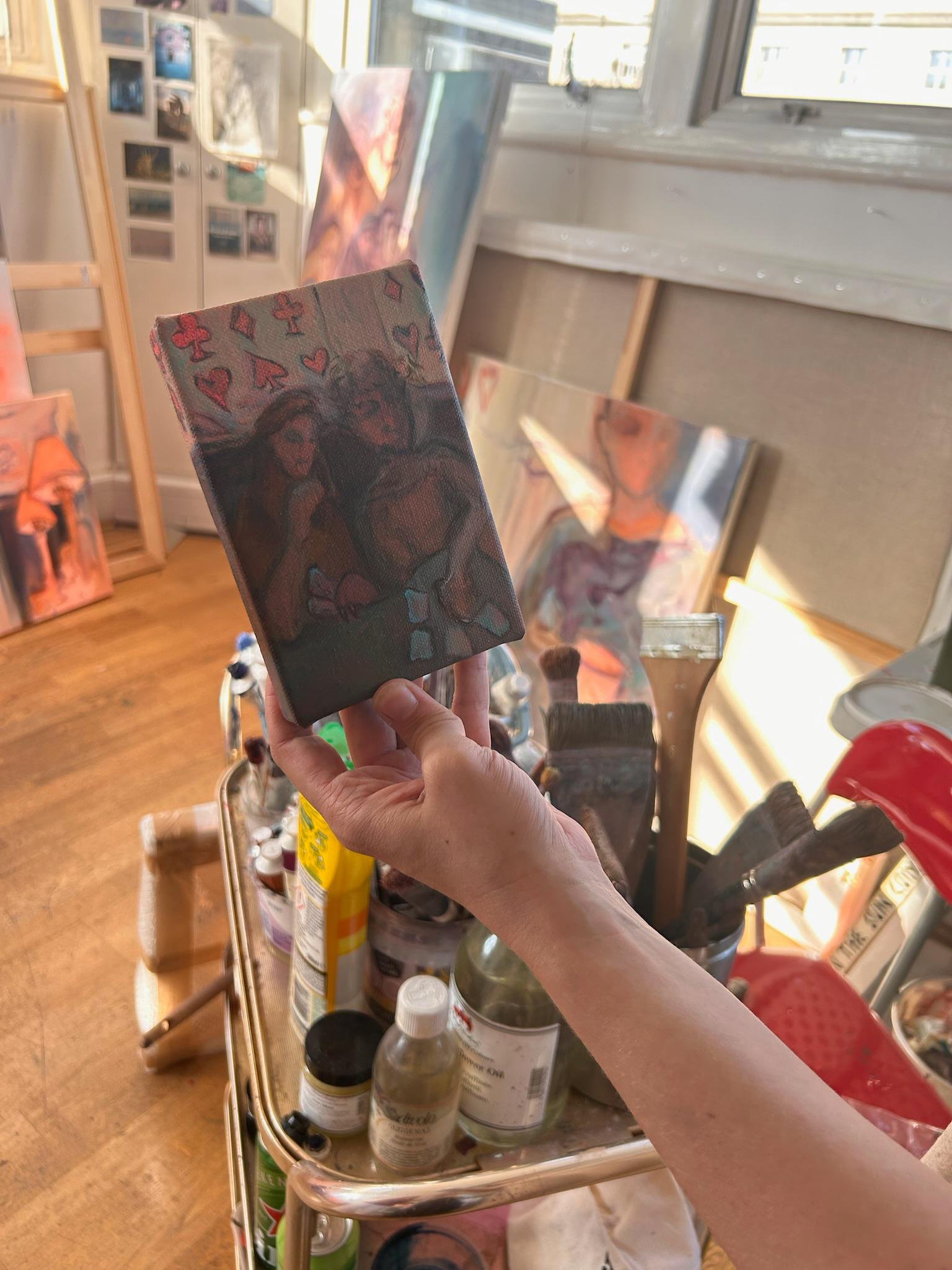
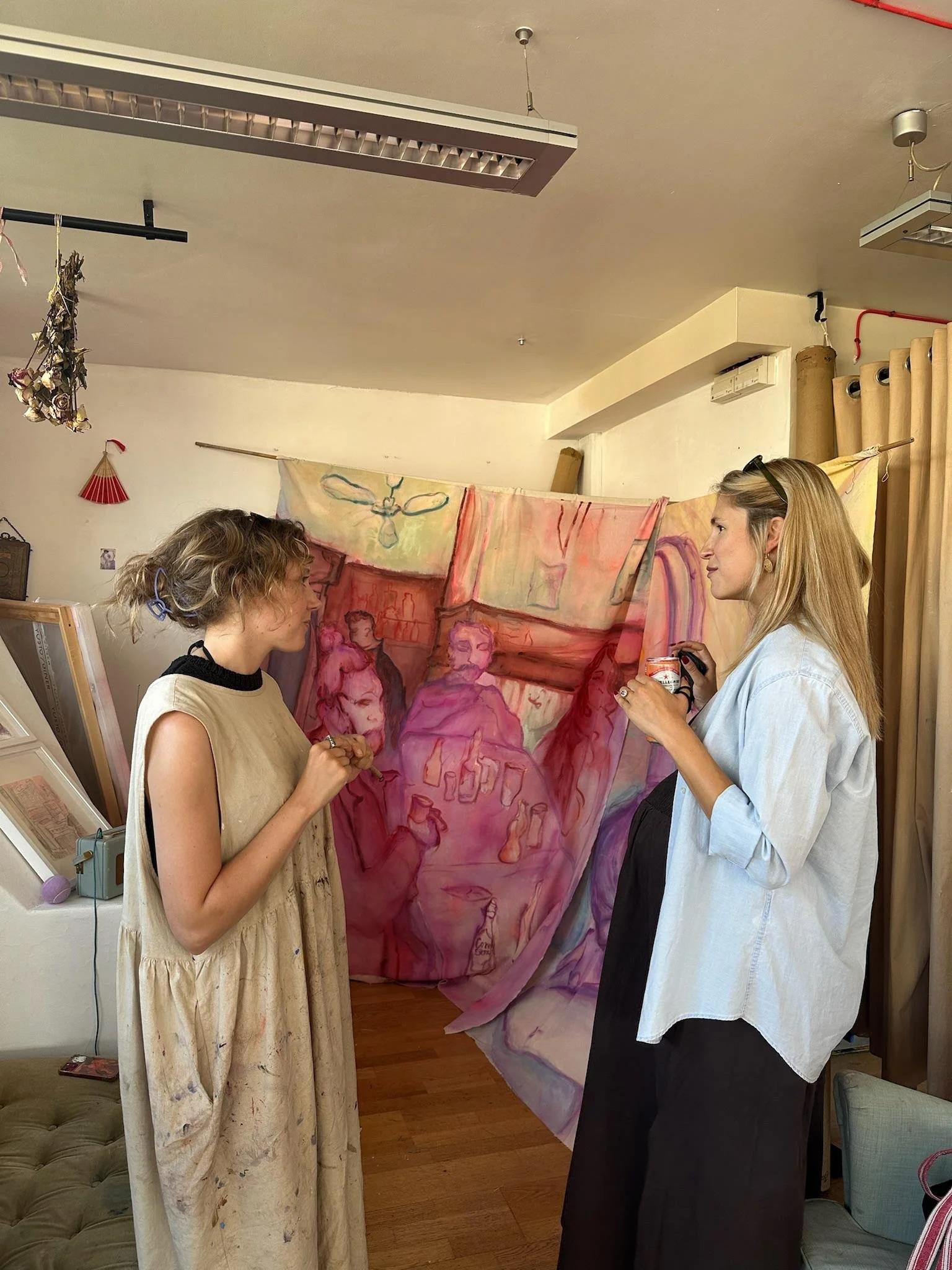
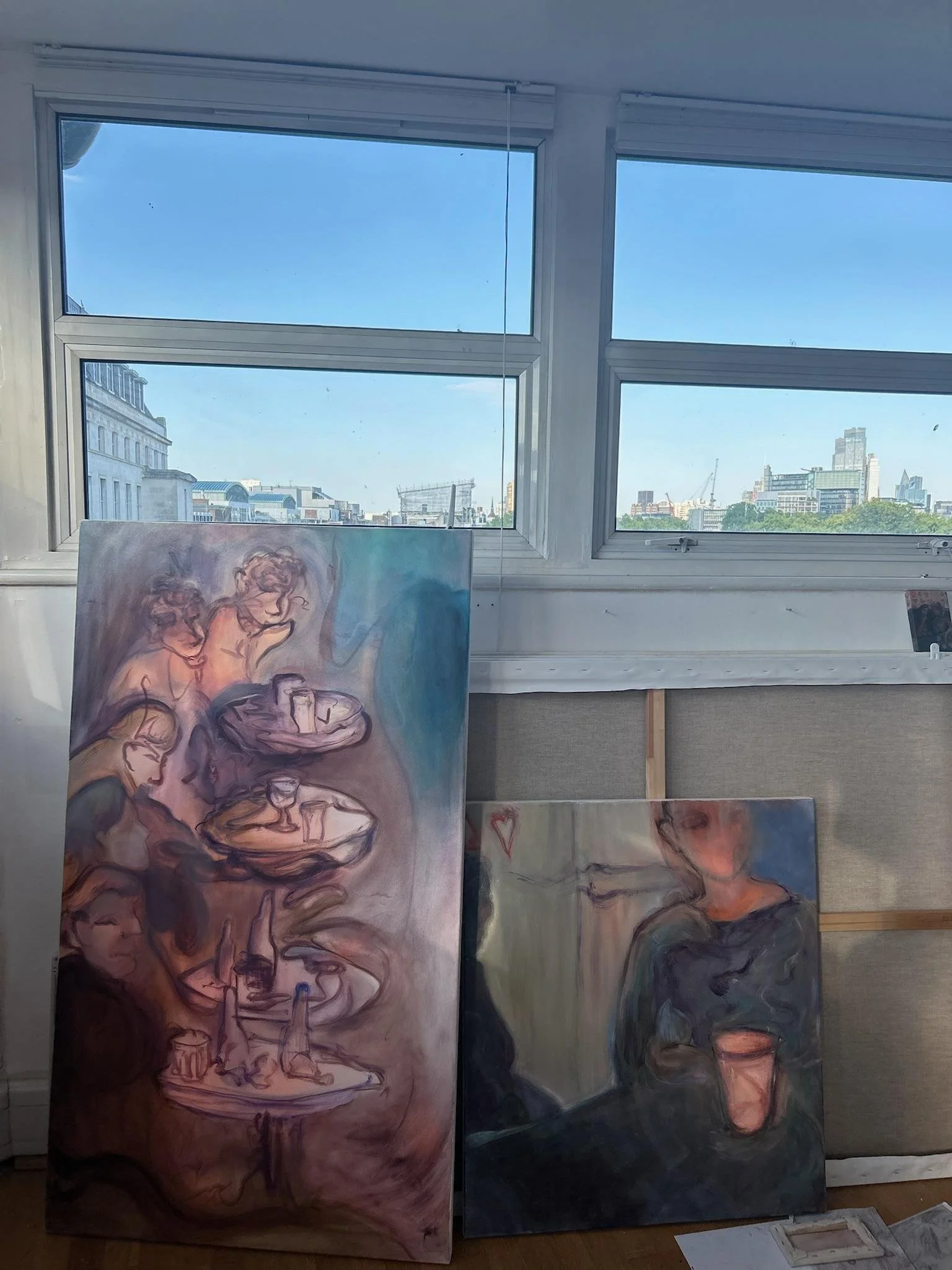
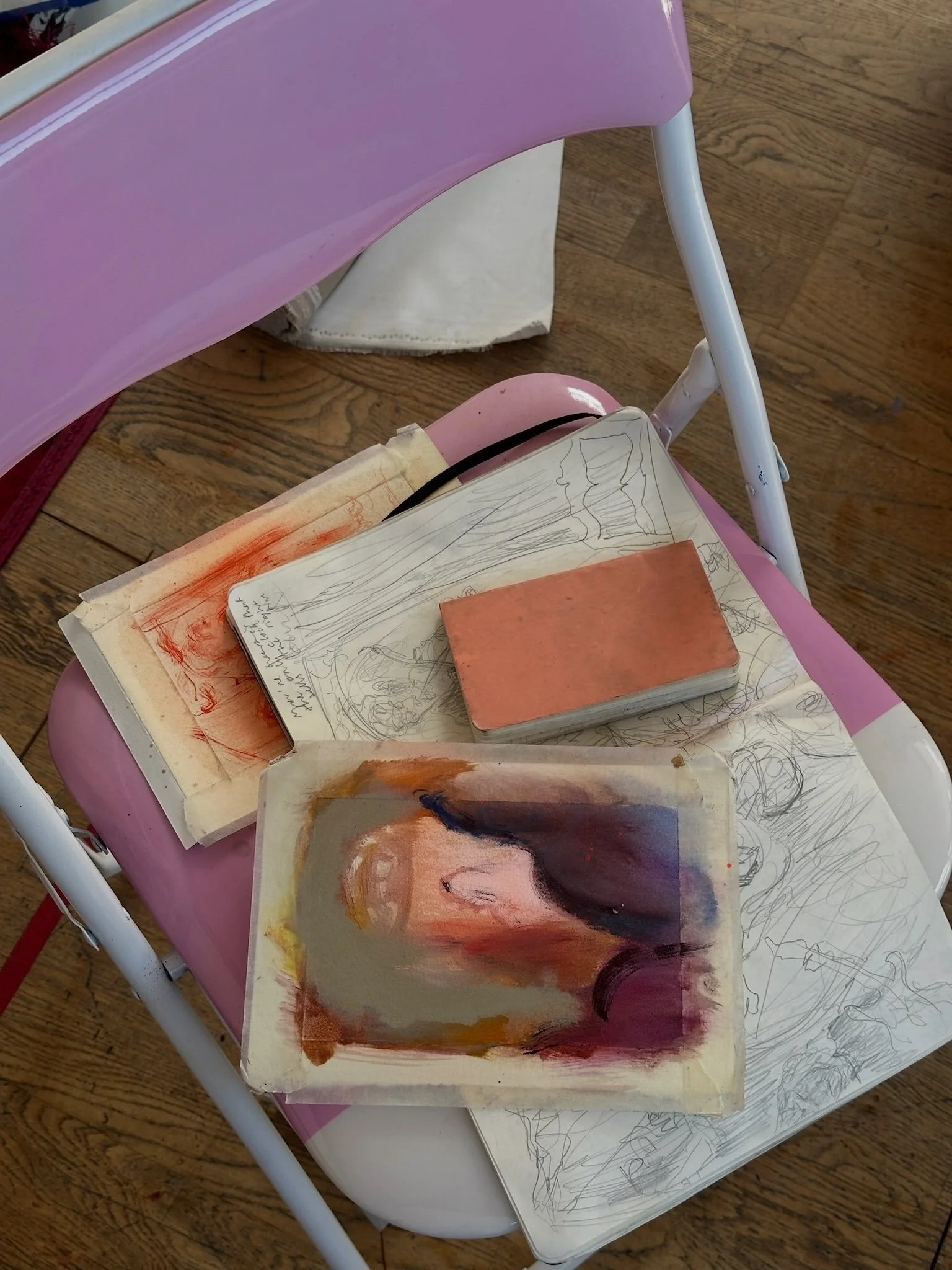
Harriet carries a sketchbook almost everywhere she goes, capturing those little moments in pencil before they slip away. Its pages hold everything from loose, instinctive marks to carefully observed studies, each serving as a different starting point for the paintings that follow. Back in the studio, these fragments evolve into immersive, large-scale works that soften the edges between observation, memory and dream. Rather than simply recreating a scene like a photograph, Harriet's paintings preserve—or conserve, in her own words—not only a moment, but its atmosphere. Through symbolism, layered compositions and softly blurred silhouettes, they preserve something well beyond mere recollection: the emotional texture of the experience itself.
How place shapes a painter
One of the most interesting conversations of our evening with Harriet in her Holborn studio centred around the influence of place on her practice.
Recent years have taken her between London, Mexico City and Brescia in northern Italy—each location leaving a distinct imprint on both the subjects she paints and the visual language she employs.
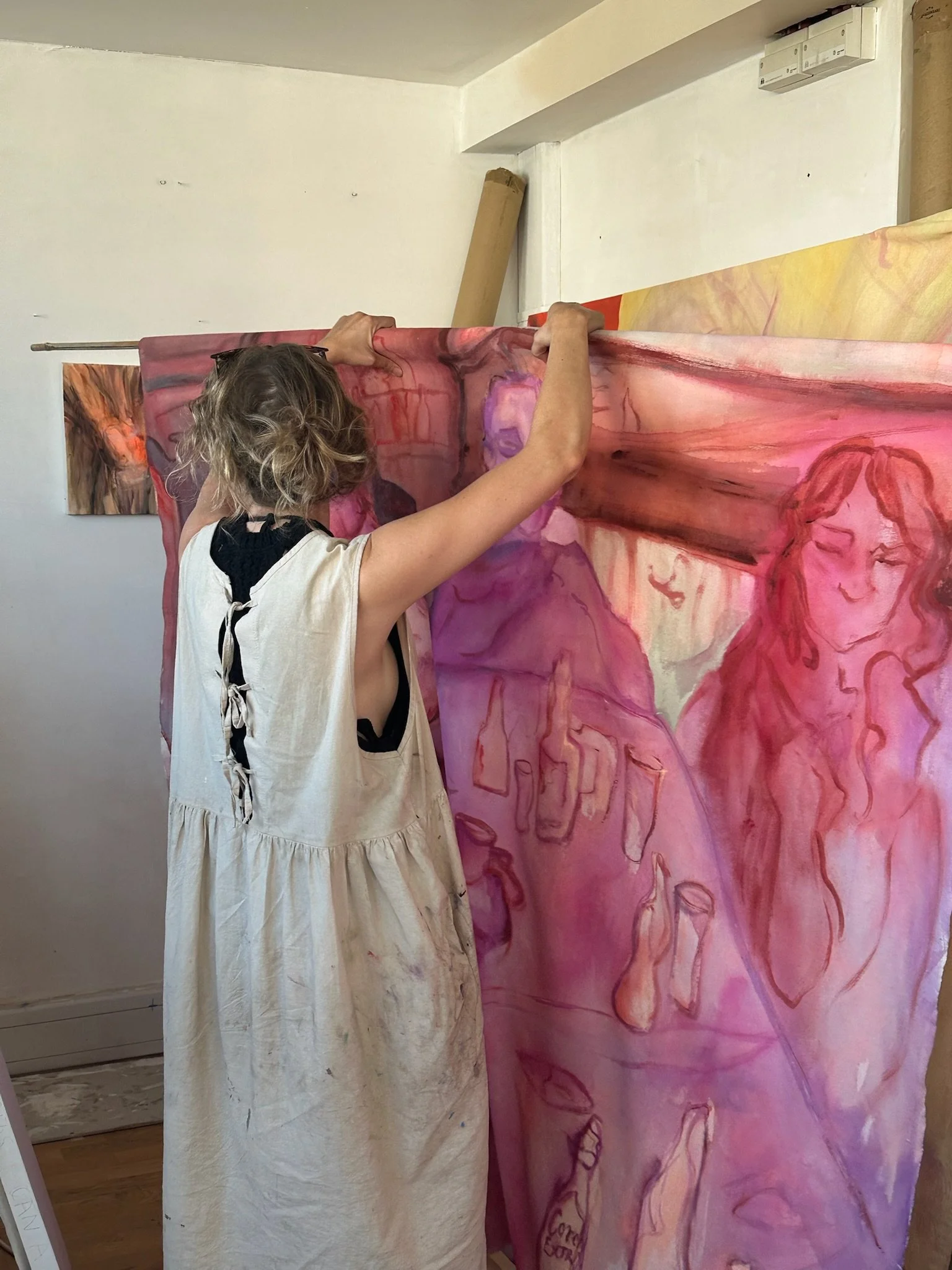
One of the chapters in Harriet's evolving practice unfolded during her residency at Koik Contemporary in Mexico City, where she began experimenting with manta cruda: a humble, unbleached cotton cloth deeply embedded in Mexican craft traditions, in place of her usual canvas. I like to think of this shift as more than just a technical one. Another way in which the city entered her practice—not only through its colours, subjects, and life rhythm, but through the very material on which those moments were captured.
After quickly typing "manta cruda" into my notes during the visit (or rather, "mantra crudo", which led to a fair amount of googling afterwards before finding the actual thing), I discovered that the fabric generally absorbs paint more readily than a traditional canvas. It made me wonder whether that subtly changed the immediacy of Harriet's process, perhaps encouraging a more instinctive gesture and presenting a different kind of creative challenge. That is one question for our next studio visit.
Now, if Mexico changed how Harriet painted, Italy shifted the what.
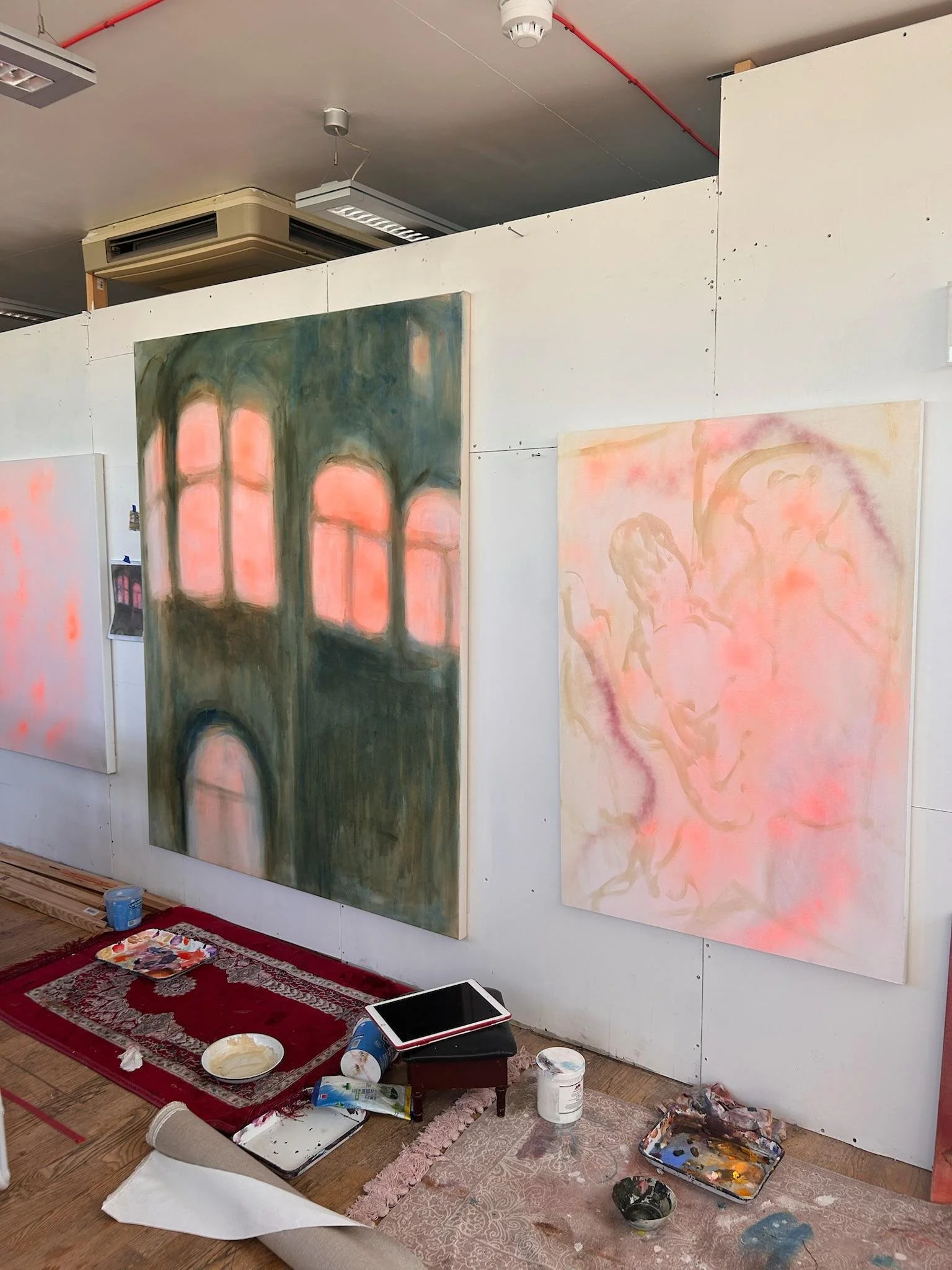
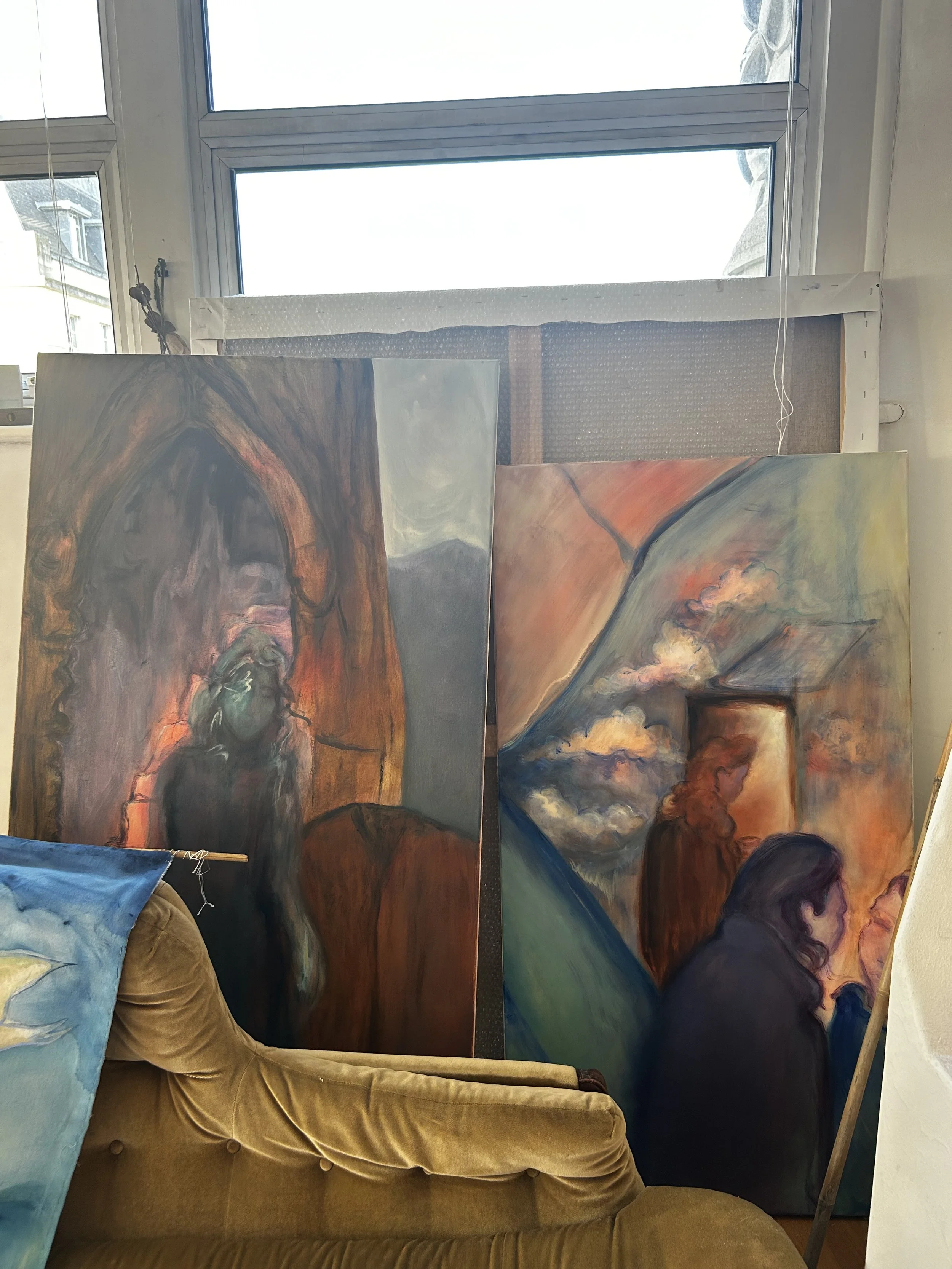
Surrounded by centuries of Italian architecture while at the Palazzo Monti residency, her attention moved from the people inhabiting spaces to the spaces themselves. Historic interiors, ornate ceilings and architectural details became central protagonists, giving these paintings a distinctly different mood. Yet they never read as empty buildings. They feel inhabited by memory—silent witnesses carrying the traces of the lives, conversations and histories that have unfolded within them.
It was striking to see how dramatically a change in environment could redirect an artist's gaze without losing the underlying themes that continue to connect the work.
The sacred in the everyday
One thread that continued to reveal itself throughout our visit was Harriet's fascination with the visual language of devotion.
Several of her smaller works are referred to as Icons—unmistakable nod to religious painting—yet what they venerate are not saints or biblical narratives, but the rituals of contemporary life.
There's something almost reverential about Harriet's paintings. They borrow from the compositional gravity of religious imagery while bathing everyday life in warm, rose-tinted hues. The result is an enticing paradox I can’t quite resist: works that are both timeless and deeply contemporary all at once, suggesting that ordinary moments of togetherness deserve the same care and attention once reserved for religious subjects.
Harriet's love of storytelling extends well beyond painting. Having studied English Literature before Fine Art at City & Guilds, it's no surprise that words occasionally find their way into her work. Song lyrics, fragments of text and stencilled phrases appear along the edges of certain canvases, adding another layer to the paintings while creating a dialogue between image and language—and more explicit glimpses into the broader cultural influences that inform her practice.
We can't wait to share the next visit with you!